
Else if ladder in C programming in Hindi with example समझना हर उस student के लिए जरूरी है जो C language की basic से advanced concepts सीखना चाहता है। अगर आप programming की दुनिया में नए हैं और decision-making statements को लेकर confused हैं, तो यह post आपके लिए ही लिखी गई है।
इस post में हम step by step समझेंगे कि else if ladder क्या होता है, यह कब और क्यों use किया जाता है, और इसका syntax कैसा होता है। साथ ही हम कुछ real-world जैसे examples देखेंगे जिनसे concept बिल्कुल crystal clear हो जाएगा।
जब तक आप इस post को पूरा पढ़ लेंगे, तब तक आप न सिर्फ else if ladder को theory में समझ चुके होंगे, बल्कि खुद से code भी लिख सकेंगे। तो चलिए शुरू करते हैं बिना किसी देरी के।
Table of Contents
C Programming में Decision Making क्या होती है?
Programming में हमें अक्सर ऐसी situations आती हैं जहाँ हमें किसी condition के आधार पर अलग-अलग काम करने होते हैं। जैसे कि real life में हम सोचते हैं – “अगर बारिश हो रही है तो छाता ले जाओ, नहीं तो बिना छाते के जाओ।” इसी तरह programming में भी हम conditions check करते हैं और उसके अनुसार code execute करते हैं।
C programming में decision making के लिए mainly ये statements use होती हैं:
- if statement
- if-else statement
- else if ladder
- switch statement
- Ternary operator
इनमें से else if ladder सबसे ज़्यादा use होने वाला structure है जब multiple conditions को check करना हो।
Else If Ladder क्या होता है?
जब हमें एक के बाद एक कई conditions check करनी हों, और हर condition के लिए अलग-अलग output देना हो, तो हम else if ladder का use करते हैं। इसे ladder इसलिए कहते हैं क्योंकि यह एक सीढ़ी की तरह ऊपर से नीचे की तरफ conditions check करता जाता है।
जैसे ही कोई condition true होती है, उससे जुड़ा block execute हो जाता है और बाकी सभी conditions को skip कर दिया जाता है। अगर कोई भी condition true नहीं होती, तो सबसे आखिरी else block execute होता है।
Else If Ladder का Syntax
if (condition1) {

    // condition1 true होने पर यह execute होगा

} else if (condition2) {

    // condition2 true होने पर यह execute होगा

} else if (condition3) {

    // condition3 true होने पर यह execute होगा

} else {

    // कोई भी condition true नहीं होने पर यह execute होगा

}यहाँ ध्यान देने वाली बात यह है कि:
- Conditions top to bottom check होती हैं।
- जैसे ही एक condition true होती है, उसका block run होता है और बाकी skip हो जाते हैं।
- आखिरी else optional होता है, लेकिन best practice है इसे लिखना।
Else If Ladder का Flow Diagram
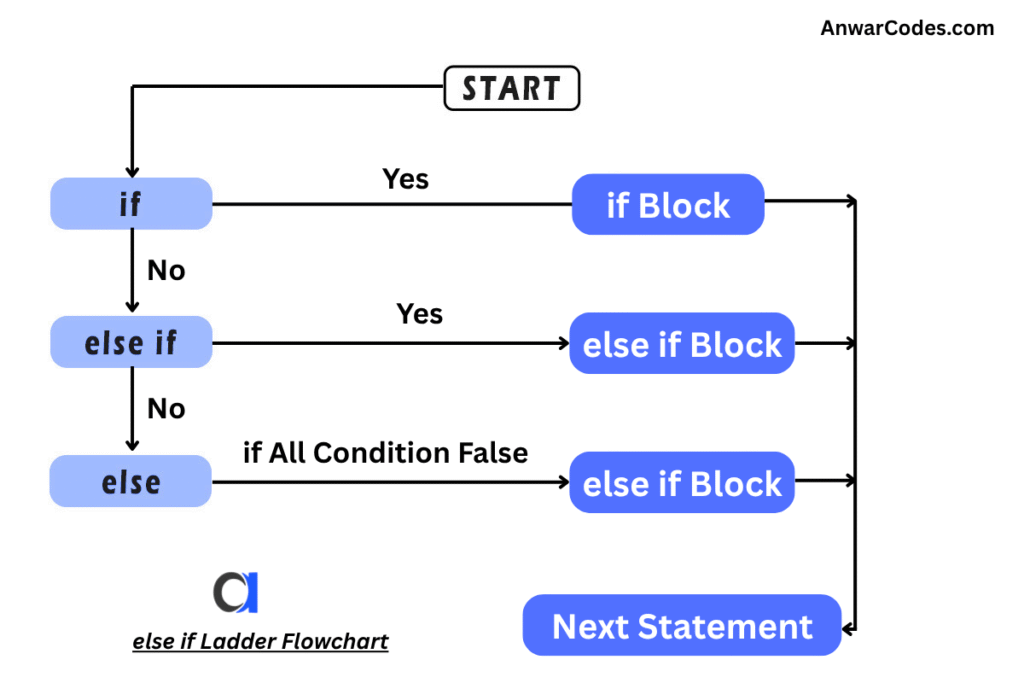
यह flow clearly दिखाता है कि program एक बार में सिर्फ एक ही block execute करता है।
Else If Ladder in C – Example 1: Grade System
सबसे classic example है एक student के marks के आधार पर grade देना।
#include <stdio.h>

int main() {
    int marks;
    printf("Enter your marks (0-100): ");
    scanf("%d", &marks);

    // Determine grade using an else-if ladder based on marks
    if (marks >= 90) {
        printf("Grade: A+\n");
    } else if (marks >= 80) {
        printf("Grade: A\n");
    } else if (marks >= 70) {
        printf("Grade: B\n");
    } else if (marks >= 60) {
        printf("Grade: C\n");
    } else if (marks >= 50) {
        printf("Grade: D\n");
    } else {
        printf("Grade: F (Fail)\n");
    }

    return 0;
}
इस example में program पहले check करता है कि marks 90 से ज़्यादा हैं या नहीं। अगर नहीं, तो 80 से ज़्यादा check करता है, और इसी तरह आगे बढ़ता है।
Else If Ladder in C – Example 2: Day of the Week
#include <stdio.h>

int main() {
    int day;
    printf("Enter day number (1-7): ");
    scanf("%d", &day);

    // Use an else-if ladder to map day numbers to weekday names
    if (day == 1) {
        printf("Monday\n");
    } else if (day == 2) {
        printf("Tuesday\n");
    } else if (day == 3) {
        printf("Wednesday\n");
    } else if (day == 4) {
        printf("Thursday\n");
    } else if (day == 5) {
        printf("Friday\n");
    } else if (day == 6) {
        printf("Saturday\n");
    } else if (day == 7) {
        printf("Sunday\n");
    } else {
        printf("Invalid day number!\n");
    }

    return 0;
}
Else If Ladder in C – Example 3: Number Positive, Negative या Zero
#include <stdio.h>

int main() {
    // Store the number entered by the user
    int num;
    printf("Enter a number: ");
    scanf("%d", &num);

    // Check whether the number is positive, negative, or zero
    if (num > 0) {
        printf("The number is Positive.\n");
    } else if (num < 0) {
        printf("The number is Negative.\n");
    } else {
        printf("The number is Zero.\n");
    }

    return 0;
}
यह example simple है लेकिन else if ladder की working को बहुत clearly दिखाता है।
Else If vs Switch Statement – कौन सा Use करें?
अक्सर beginners confuse हो जाते हैं कि कब else if ladder use करें और कब switch statement. आइए दोनों का comparison देखें:
| Else If Ladder | Switch Statement |
|---|---|
| Conditions range-based हों (जैसे marks >= 90) | एक ही variable की exact values check करनी हों (जैसे day == 1, day == 2) |
| Conditions complex logical expressions हों | Integer या character values से comparison हो |
| Integer या character values से comparison हो | Code को ज़्यादा readable बनाना हो |
Common Mistakes जो Beginners करते हैं
C programming में else if ladder लिखते वक्त कुछ गलतियाँ बहुत common हैं:
1. Curly Braces भूल जाना
अगर किसी block में सिर्फ एक statement है तो braces optional हैं, लेकिन हमेशा लिखना best practice है।
2. Conditions का Order गलत रखना
Grade example में अगर आप marks >= 50 को पहले रखेंगे, तो 90 marks वाले को भी सिर्फ D grade मिलेगा। Conditions का order बहुत important है।
3. = की जगह == न लिखना
if (day = 5) और if (day == 5) में बहुत फर्क है। पहला assignment है, दूसरा comparison।
4. else block न लिखना
अगर कोई condition match नहीं होती और else block नहीं है, तो कोई output नहीं आएगा। हमेशा एक default else रखें।
Nested If vs Else If Ladder
Nested if और else if ladder दोनों अलग concepts हैं। Nested if में एक if के अंदर दूसरा if होता है, जबकि else if ladder में conditions एक के बाद एक horizontally chain होती हैं।
// Nested If (एक के अंदर एक)
if (a > 0) {
    if (b > 0) {
        printf("Both positive");
    }
}

// Else If Ladder (एक के बाद एक)
if (a > 0) {
    printf("Positive");
} else if (a < 0) {
    printf("Negative");
} else {
    printf("Zero");
}
Else if ladder को prefer किया जाता है क्योंकि यह ज़्यादा readable और maintainable होता है।
Else If Ladder के फायदे
- Multiple conditions को एक structured तरीके से handle किया जा सकता है।
- Code readable और clean रहता है।
- Default case (else) से error handling आसान हो जाती है।
- Range-based conditions के लिए switch से बेहतर है।
Conclusion (निष्कर्ष)
तो आज आपने सीखा Else if ladder in C programming in Hindi with example. यह एक बेहद fundamental concept है जिसे हर C programmer को अच्छी तरह समझना चाहिए। इस post में हमने देखा कि else if ladder क्या होता है, इसका syntax क्या है, और इसे real examples जैसे grade system, days of week, और number checking में कैसे apply करते हैं। साथ ही हमने common mistakes, nested if से comparison, और switch statement से अंतर भी समझा। इन सब concepts को समझने के बाद आप बहुत confidently multiple-condition based programs लिख सकते हैं।
अब आपकी बारी है – आज ही अपना Vs Code खोलिए और ऊपर दिए गए examples को खुद type करके run करिए। Coding सीखने का सबसे अच्छा तरीका है practice, practice और practice। अगर कोई doubt हो या कोई specific example चाहिए तो नीचे comment करें। और अगर यह post helpful लगी, तो इसे अपने दोस्तों के साथ ज़रूर share करें जो C programming सीख रहे हैं।
Frequently Asked Questions
Q1. Else if ladder और simple if-else में क्या फर्क है?
Ans: Simple if-else में सिर्फ दो cases होते हैं – true या false। जबकि else if ladder में आप जितनी चाहें उतनी conditions chain कर सकते हैं। जब आपको 3 या उससे ज़्यादा conditions check करनी हों, तो else if ladder use करना चाहिए।
Q2. क्या else if ladder में else block ज़रूरी है?
Ans: नहीं, else block technically optional है। लेकिन best practice यही है कि हमेशा एक final else block रखें ताकि कोई unexpected input आने पर भी program ठीक से respond करे।
Q3. Else if ladder में maximum कितनी conditions रख सकते हैं?
Ans: C language में इस पर कोई fixed limit नहीं है। आप theoretically जितनी चाहें उतनी `else if` conditions लिख सकते हैं। लेकिन practically बहुत ज़्यादा conditions होने पर switch statement या array/map-based approach बेहतर होती है।
Q4. क्या else if ladder floating point numbers के साथ काम करता है?
Ans: हाँ, यह floating point numbers के साथ भी काम करता है। यही एक बड़ा कारण है जिसकी वजह से switch statement floating points support नहीं करती लेकिन else if ladder करता है।
Q5. क्या एक ही program में multiple else if ladders हो सकते हैं?
Ans: बिल्कुल हाँ। एक program में आप जितने चाहें उतने अलग-अलग else if ladders रख सकते हैं। हर ladder independently काम करता है।